
.png)
%20(1).png)
Designer clothing offers a unique opportunity for resellers because it maintains its value in the resale market better than almost any other category. But this lucrative reselling potential only works when luxury clothes and fashion items are listed on the right platform. A vintage Chanel jacket can sell in a week on the right platform, while a Supreme box logo tee listed on the wrong marketplace will likely never sell.
In this guide, we'll take a look at eight of the best places to sell designer clothes online. We'll go over what to look for when choosing a marketplace to sell your used designer clothes and accessories, and discover how to get the best return on investment once you've decided where to list. We'll review luxury-focused platforms, general marketplaces with thriving fashion communities, and vintage-specific channels, and help you make the best decision for your designer and luxury resale needs.
Key Takeaways
- Different marketplaces are suited to different designer categories: luxury handbags, streetwear, contemporary designer, and vintage will each sell better on more dedicated niche platforms.
- Some platforms, including eBay, Poshmark, Vestiaire Collective, and Vinted, offer authentication and verification programs to maintain trust between buyers and sellers.
- Selling across multiple platforms is the most reliable way to reach the right audiences and sell designer fashion quickly and profitably.
What to Look for in the Best Place to Sell Designer Clothes Online
The luxury reselling niche is small in comparison to other reselling niches, but despite its relatively small market share, it boasts a surprising variety of categories and buyer interests. This variety is reflected in the different marketplaces that cater to buyers and sellers who are looking for their specific type of preloved luxury goods. With a variety of different marketplaces to choose from, it's important to understand that each one is most suitable for — and often, outright designed around — a specific kind of designer fashion reselling. Choosing the right one for what you're selling is essential for success, and it comes down to a few key factors.
First, there's the obvious and most important factor: buyers. If you list on a marketplace that doesn't have the right buyers, your items might never even sell, much less sell at fair market value. Streetwear, luxury handbags, contemporary designer womenswear, and vintage designer each have platforms where knowledgeable buyers actively hunt for them.
Next, there's the issue of authentication. For items worth more than $500, authentication is practically a necessity. Several platforms include free authentication, and some even require it for high-value and high-risk items. Authentication not only keeps you safe from claims of inauthenticity; it also boosts buyer confidence and helps higher-value items sell faster.
Finally, selling fees will have a huge impact on your bottom line, and are important to consider before you make your first sale. Fees can vary widely across platforms and can include commission, payment processing, and shipping. Compare what each platform charges before listing, since the fees tend to climb steeply for high-value items.
The 8 Best Places to Sell Designer Clothes Online
Now that we've understood the factors that will impact your choice of where to sell designer clothes, we'll explore our top picks for the best places to sell luxury fashion online. We'll briefly go over each marketplace, break down its buyer demographics and review its top-performing categories to help you find the best one for your selling niche and style.
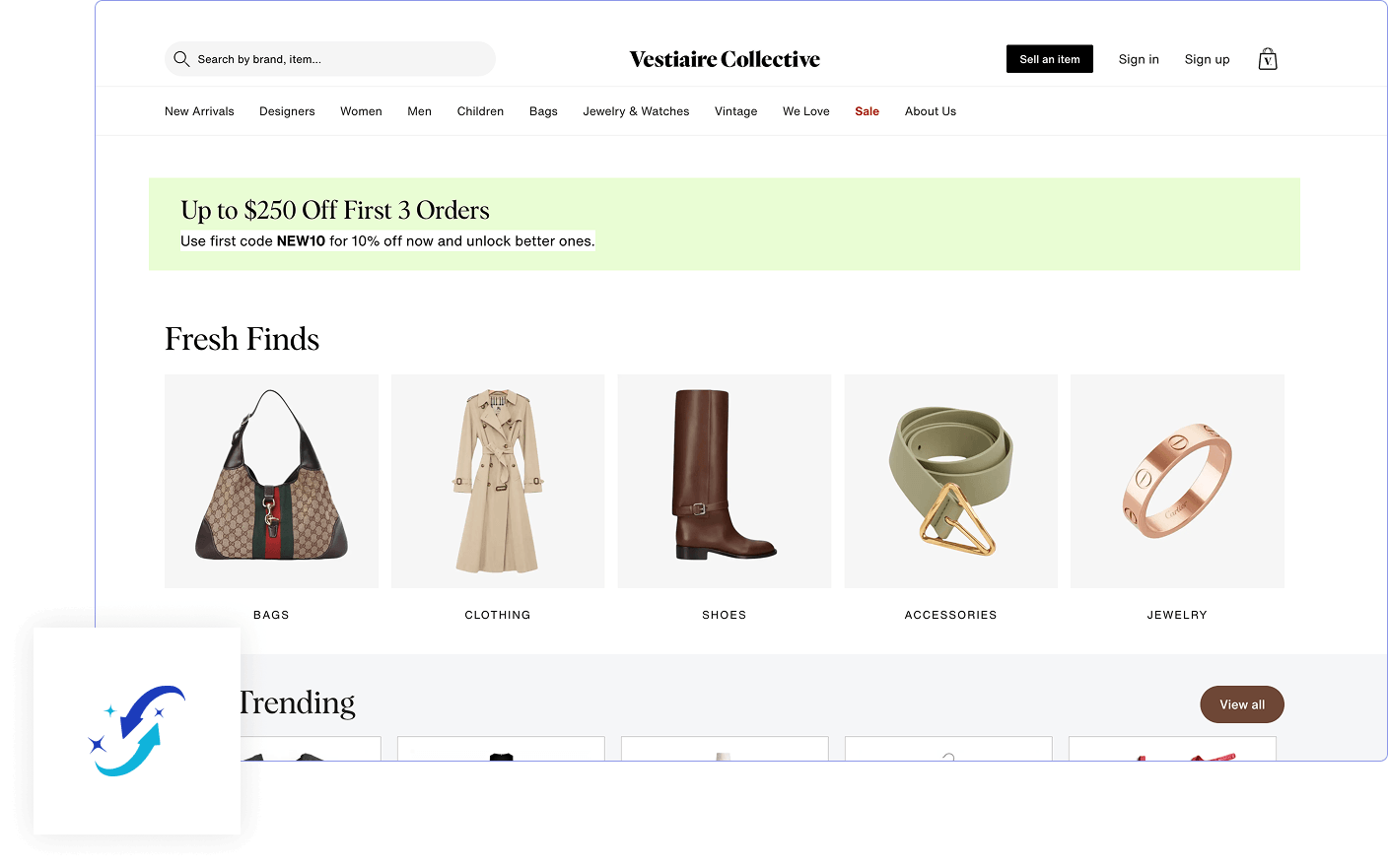
1. Vestiaire Collective
Vestiaire Collective is a luxury resale platform with sellers and customers in over 70 countries worldwide, dedicated specifically to pre-owned luxury designer and vintage fashion. The marketplace attracts fashion-focused shoppers in Europe, North America, and Asia, with particularly strong communities in Paris, London, and Tokyo. Vestiaire Collective is the first platform you should consider for selling luxury pieces from top-tier brands.
For sellers, Vestiaire's biggest advantage is its physical authentication service. Items sold on the marketplace are shipped to a Vestiaire warehouse first, where expert authenticators inspect materials, hardware, and construction before sending them to the buyer. This authentication is built into the buyer experience and gives shoppers confidence to buy items at luxury prices. Sellers also benefit from a tiered commission structure that rewards higher-priced item sales with lower commission rates, making high-ticket items especially profitable to sell on the platform.
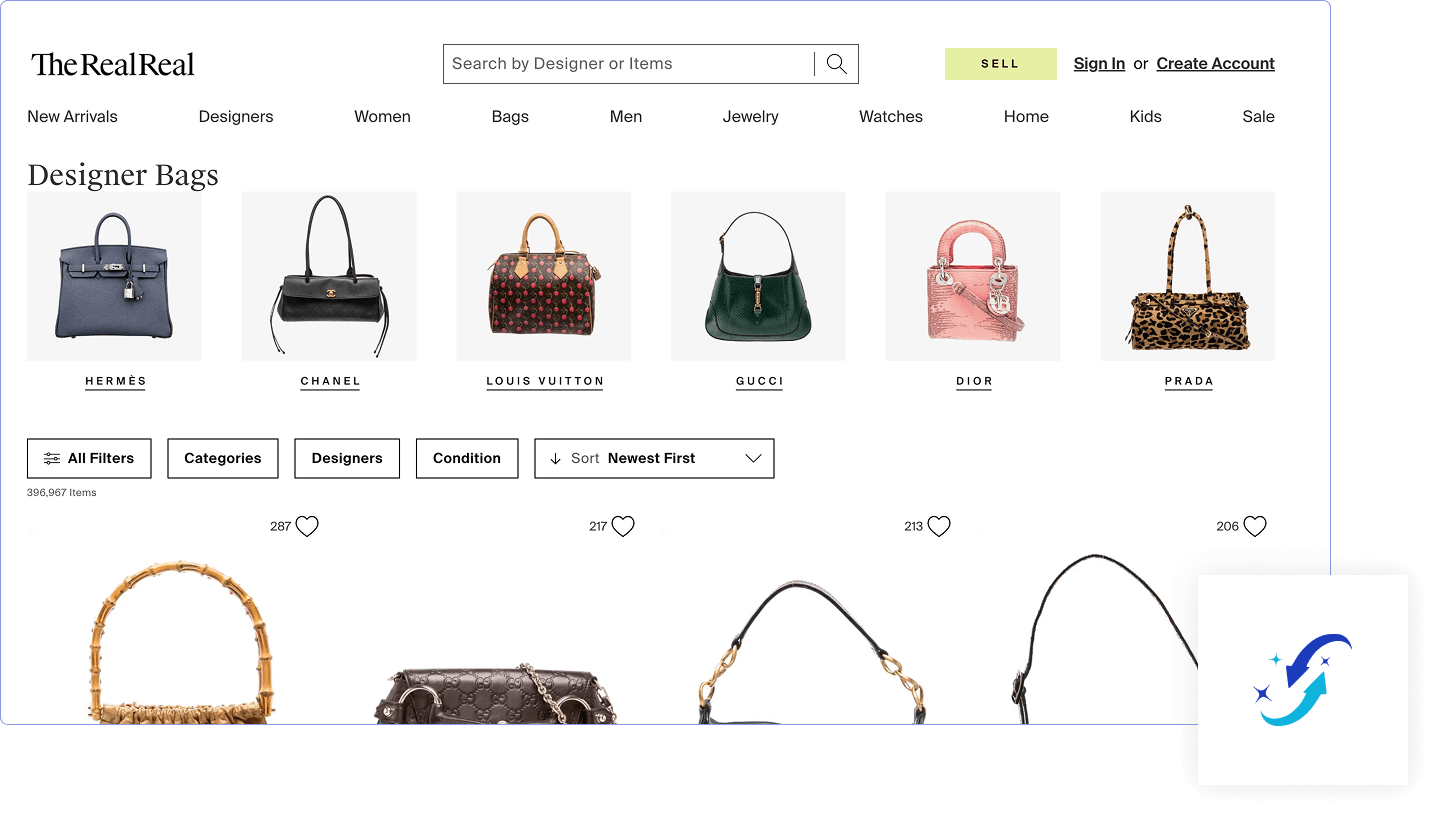
2. The RealReal
The RealReal is a US-based luxury consignment platform focused on authenticated pre-owned designer fashion, jewelry, watches, and fine art. The platform has built a strong reputation for its authentication and curation, making it a good choice for high-end designer pieces. Buyers on The RealReal are primarily US-based shoppers looking for authenticated luxury at a discount. Unlike Vestiaire Collective, which is a marketplace, The RealReal is effectively an ecommerce consignment store. Sellers ship items in, and The RealReal handles pricing, photography, listing, and fulfillment.
For designer sellers, The RealReal's main draw is its convenience. In exchange, it takes a commission that varies by item value, category, and seller tier, with sellers earning between 20% and 70% on most items (up to 85%+ for top-tier consignors on high-value pieces). The platform is best for sellers with one-off luxury pieces or limited time who want a hands-off approach and are willing to trade margin for it, though it's not the best option for sellers who want to sell designer clothes online regularly for profit.
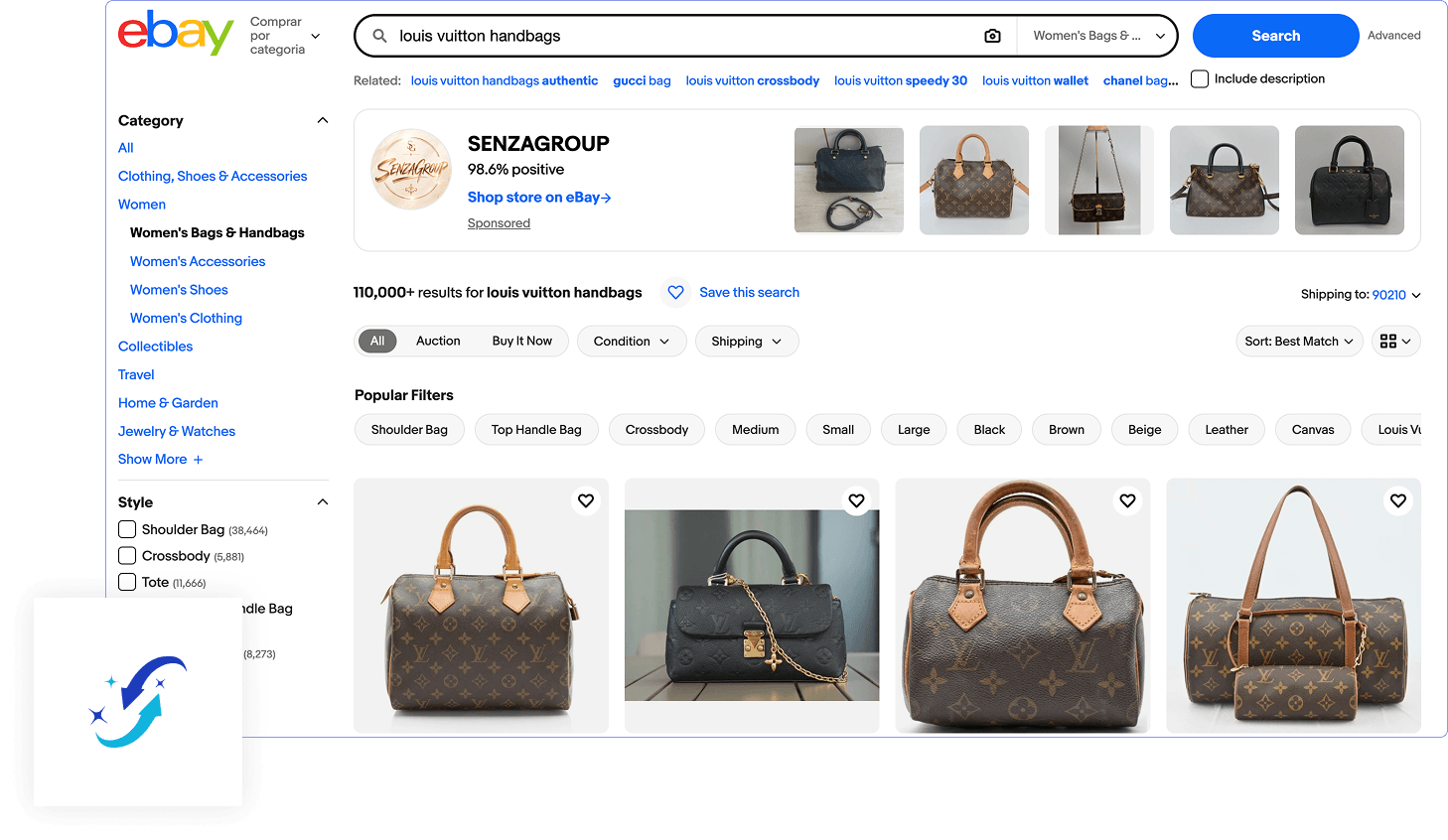
3. eBay
eBay is one of the largest online marketplaces in the world, with hundreds of millions of active buyers across virtually every product category. Its fashion category has grown substantially in recent years, particularly in the preloved luxury and designer niches. Shoppers on eBay are more varied than Grailed's or Vestiaire Collective's, spanning every demographic and shopping style — from bargain hunters to serious collectors. But despite being a general ecommerce marketplace with a vast range of buyer demographics, eBay has actively worked to strengthen the luxury and designer selling niche with programs like the eBay Authenticity Guarantee.
For designer fashion sellers, the eBay Authenticity Guarantee program is one of the biggest reasons to list their designer and luxury pieces on the platform. The program covers apparel from select brands (including Louis Vuitton, Gucci, Balenciaga, Prada, Supreme, Off-White, Fear of God, and many more) at a $200+ price point, and at no added cost to the seller. You simply need to ship the sold item to eBay's authentication center, which then authenticates it and forwards it to the buyer. Most importantly, returns also go through this same process, avoiding potential scams that luxury resellers know so well. Along with its growing community of luxury fashion shoppers, eBay is a good platform for selling designer fashion in almost every category.
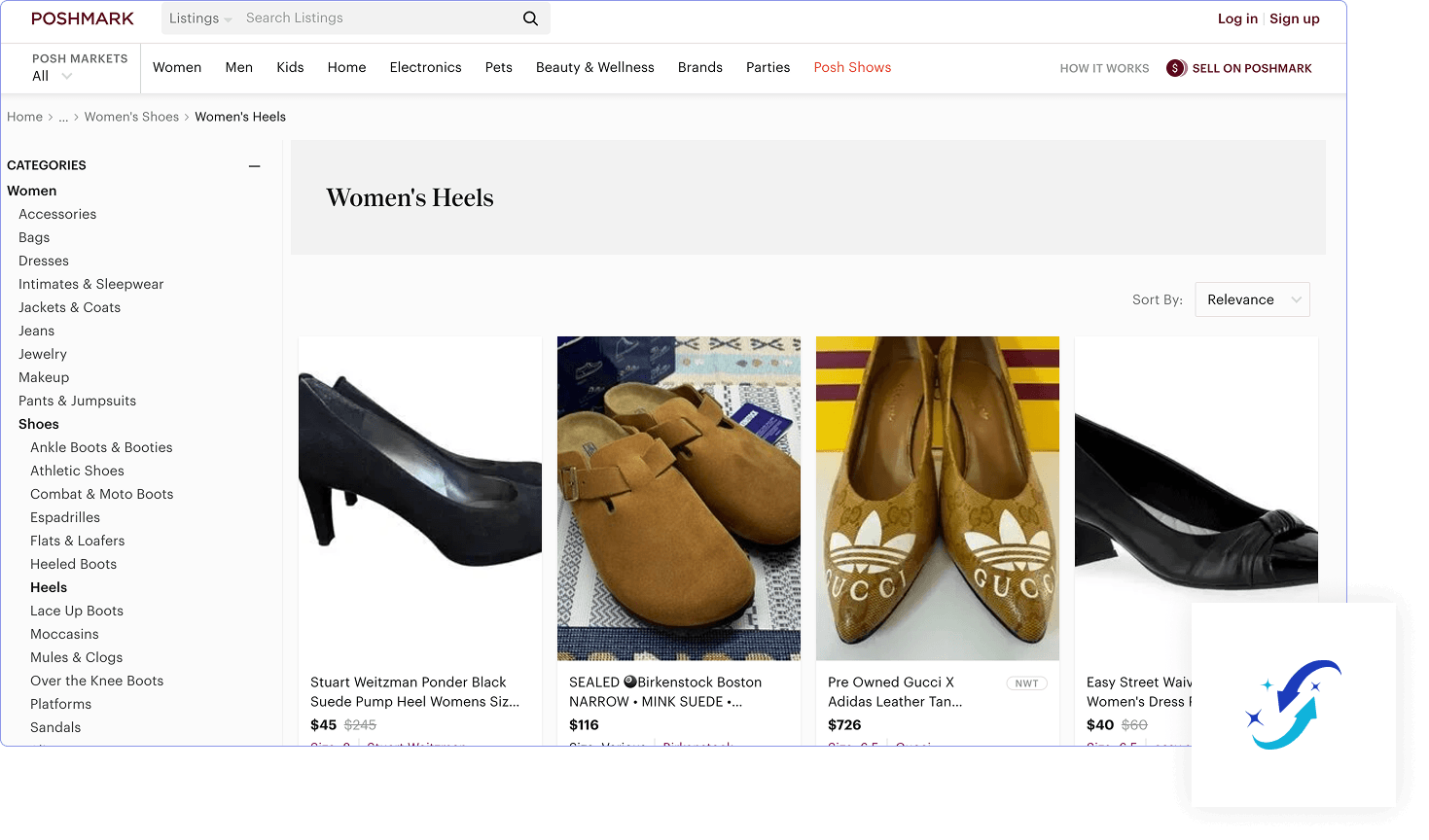
4. Poshmark
Poshmark is a US and Canada-focused fashion resale marketplace, primarily known for women's fashion but with strong men's, kids', and home categories as well. Most Poshmark users are American shoppers who browse socially, engage with other users' Closets, and often negotiate through offers. Unlike our previous three marketplaces, Poshmark provides a much more community-centered shopping experience. On the selling side, this means that more active, engaged sellers tend to get more consistent sales.
While it may require more hands-on, active engagement with buyers, Poshmark's marketplace offers sellers a great ecosystem for selling both new and used designer clothes online. For starters, there's the Posh Authenticate, a service which provides free authentication on any item sold for $500 or more. For sellers, the process is simple — ship the sold item to Poshmark's authentication facility for inspection, after which it's forwarded to the buyer. Combined with its large and engaged active buyer base — particularly for women's designer clothing and handbags — Poshmark is a great platform for selling designer womenswear at the mid-range to luxury tier.
5. Grailed
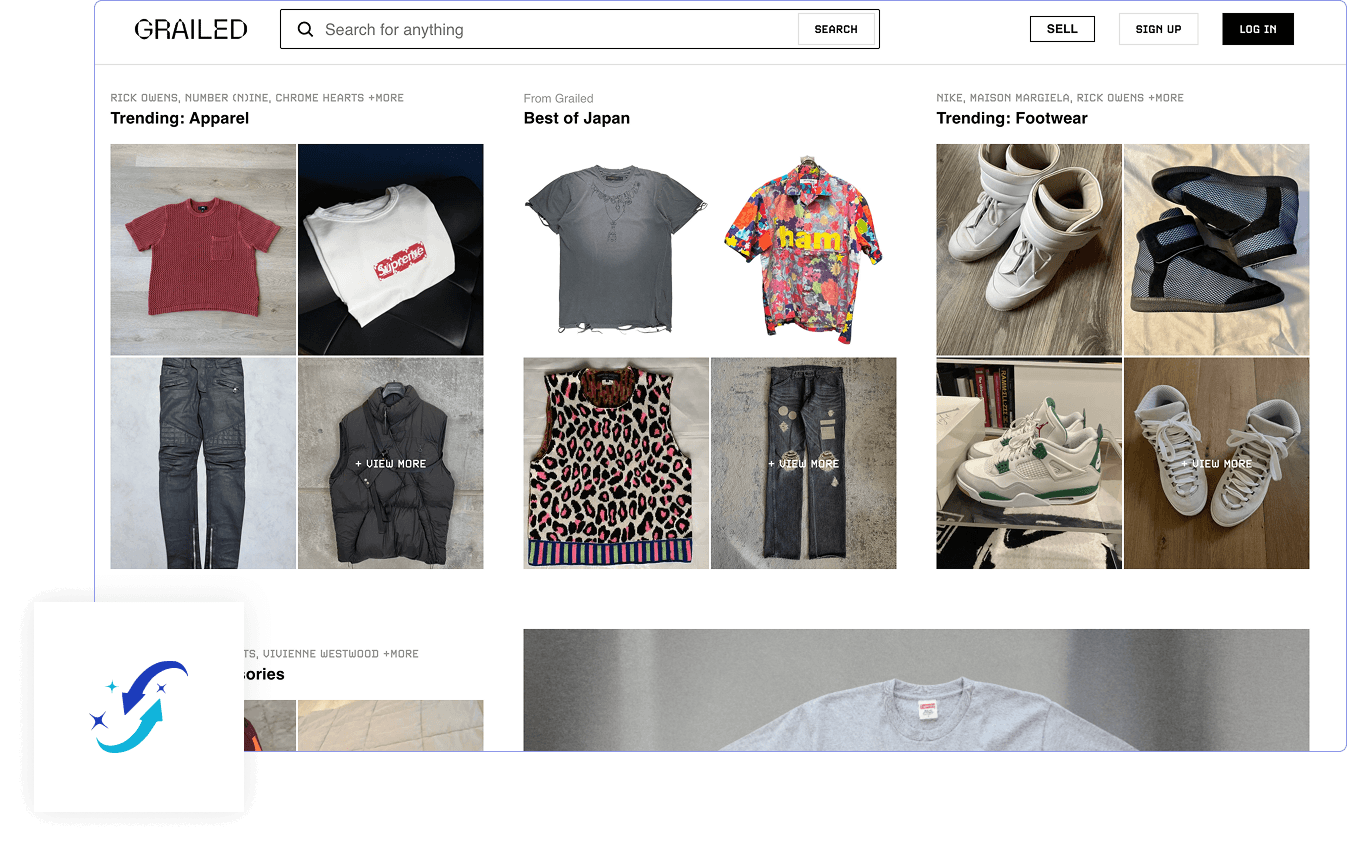
Grailed launched in 2013 specifically as a reselling platform for high-end menswear, though it has a steadily growing womenswear section too. Its primary focus is streetwear, designer menswear, archive fashion, and high-end sneakers, categorizing products by designer, menswear, womenswear, vintage, and sneakers, with curated staff picks and editorial content helping buyers discover unique pieces. Shoppers on Grailed are predominantly men aged 18 to 35, with extensive knowledge of men's designer and streetwear brands.
Grailed is a good choice for sellers who sell the designer pieces that are popular on the platform: Supreme, Rick Owens, Raf Simons, Comme des Garcons, Maison Margiela, and Balenciaga, to name a few, as well as vintage archive pieces from earlier seasons. Because shoppers on Grailed have extensive knowledge of these types of pieces, sellers can sell them at higher prices than they typically would on more general marketplaces. Finally, Grailed's fees relatively competitive in the fashion resale marketplace landscape, making it a profitable option for high-ticket items.
6. Depop
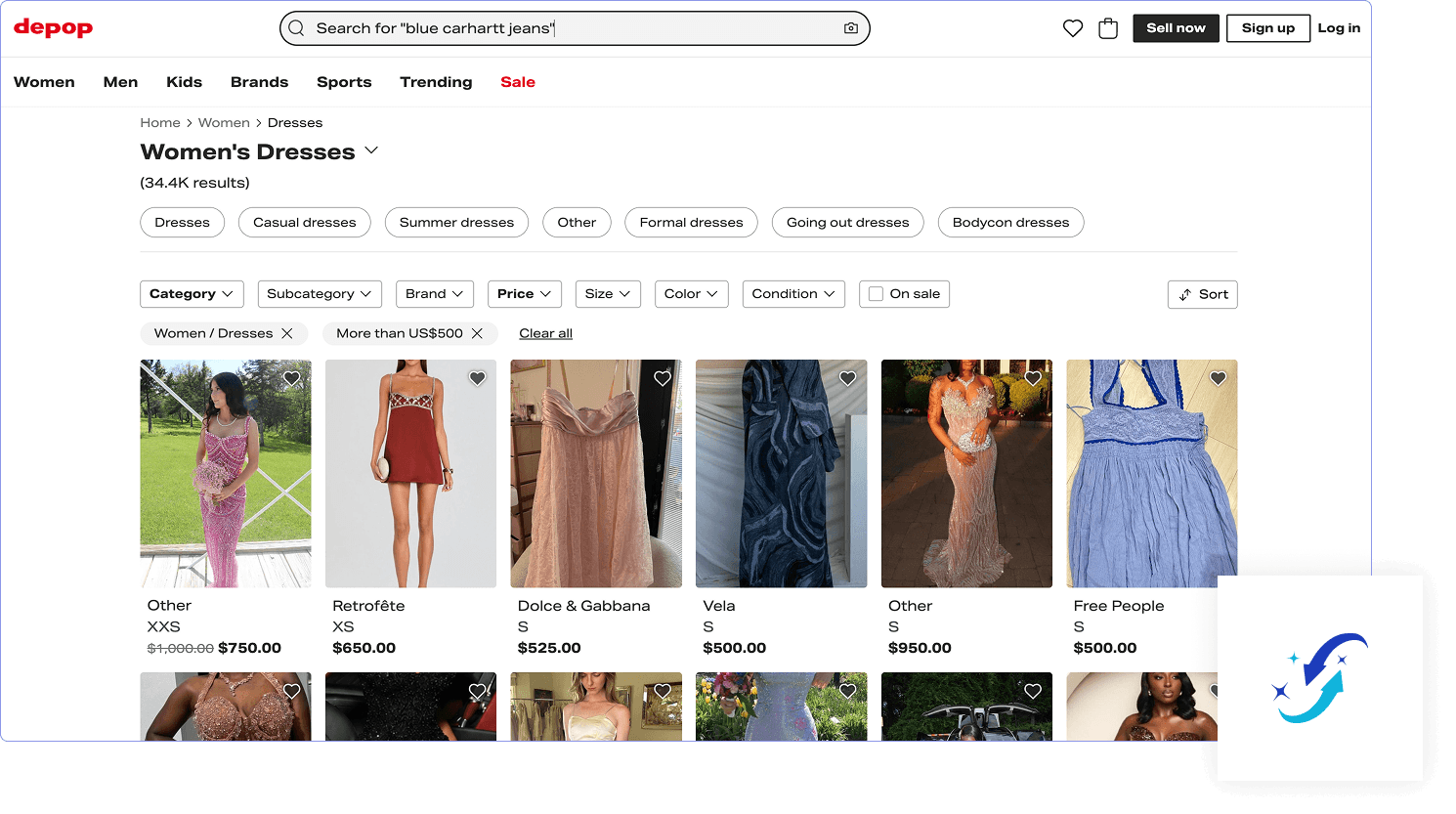
Depop is a fashion resale app designed around a social media (particularly Instagram) aesthetic that's popular with Gen Z shoppers. In fact, around 90% of Depop's users are under 26. Its main categories are vintage, streetwear, Y2K, and indie designer, with shoppers typically browsing either by scrolling the algorithm-powered feed or by searching for style and aesthetic terms.
For designer sellers, Depop works best for streetwear (Supreme, BAPE, Off-White), Y2K designer (Juicy Couture, Von Dutch, early 2000s Chanel), and indie labels popular with Gen Z shoppers. Items like classic luxury handbags and mainstream designer pieces are less suited for selling on Depop, both due to lack of buyer interest and limited seller protections.
Unfortunately, Depop has no in-house authentication service, so most sellers tend to avoid listing very expensive or frequently duped items on the platform. While sellers are not required to accept returns, claims of inauthenticity (founded or otherwise) can, in some cases, result in forcible refunds/returns and account restrictions, which puts sellers at risk. Similarly, Depop seller protection offers a maximum of $300 and covers only items lost/damaged in transit, meaning you have no recourse against fraudulent buyers, and no protection for more expensive items.
7. Vinted
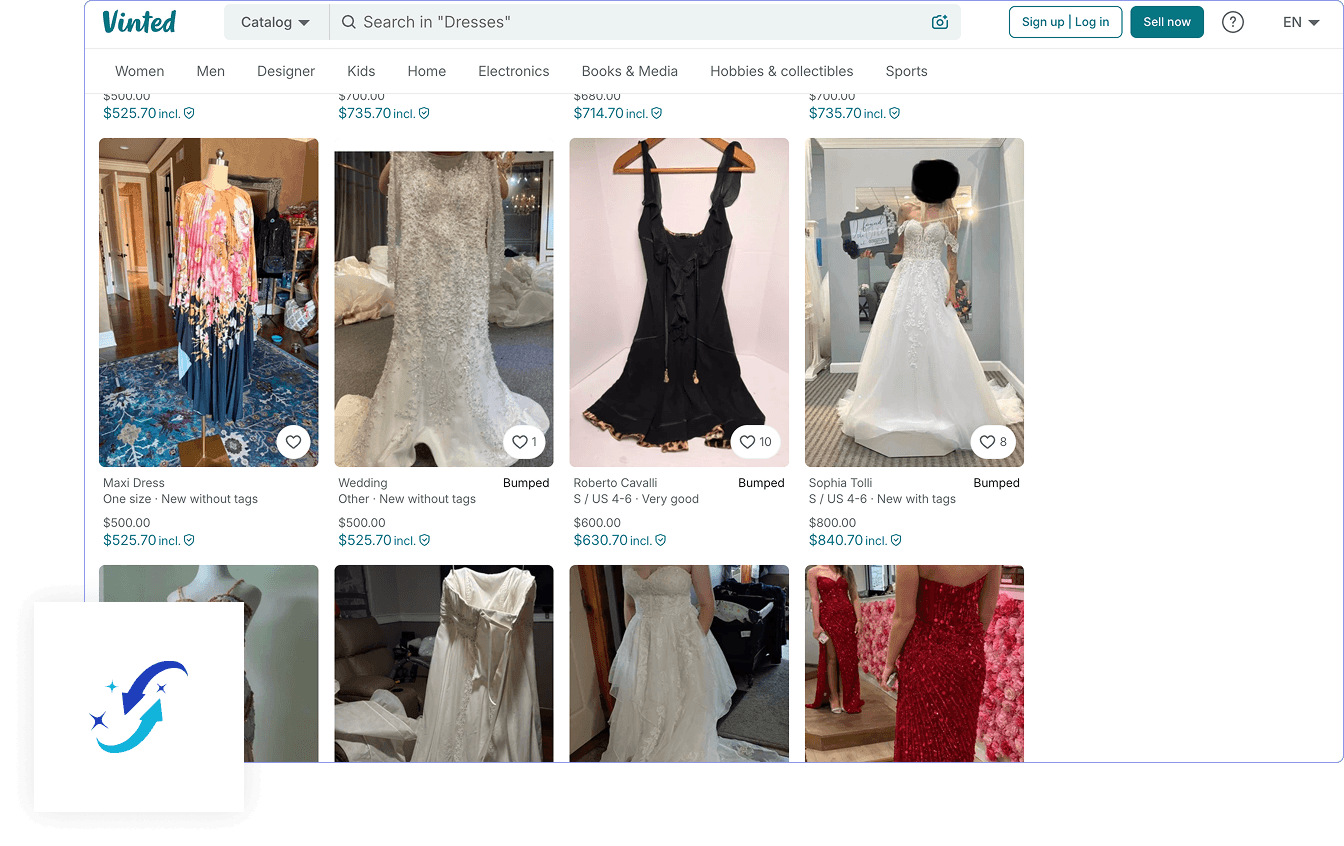
Vinted was launched in 2008 as a secondhand fashion marketplace, and has since grown to become one of the largest resale platforms in Europe, with over 100 million members across more than 20 countries. It launched a major US expansion in January of 2026, and has been steadily gaining popularity with American shoppers.
From a seller's perspective, Vinted's biggest draw is its 0% seller fee structure, made possible by a buyer-paid Buyer Protection fee, as well as the optional Item Verification Service, where trained authentication experts physically verify designer items such as handbags, shoes, watches, and some categories of clothing. Verification is possible only for certain eligible items and brands (including Bottega Veneta, Burberry, Cartier, Chanel, Dior, Fendi, Louis Vuitton, Mulberry, Prada, and YSL), and is offered as a service paid for by the buyer at checkout.
Overall, Vinted is a good option for sellers targeting European buyers, or those in the US market looking to add a zero-fee channel. For high-end and luxury goods, however, it's a good idea to verify that items are eligible for the Item Verification Service in order to protect yourself from false claims of inauthenticity.
8. Etsy
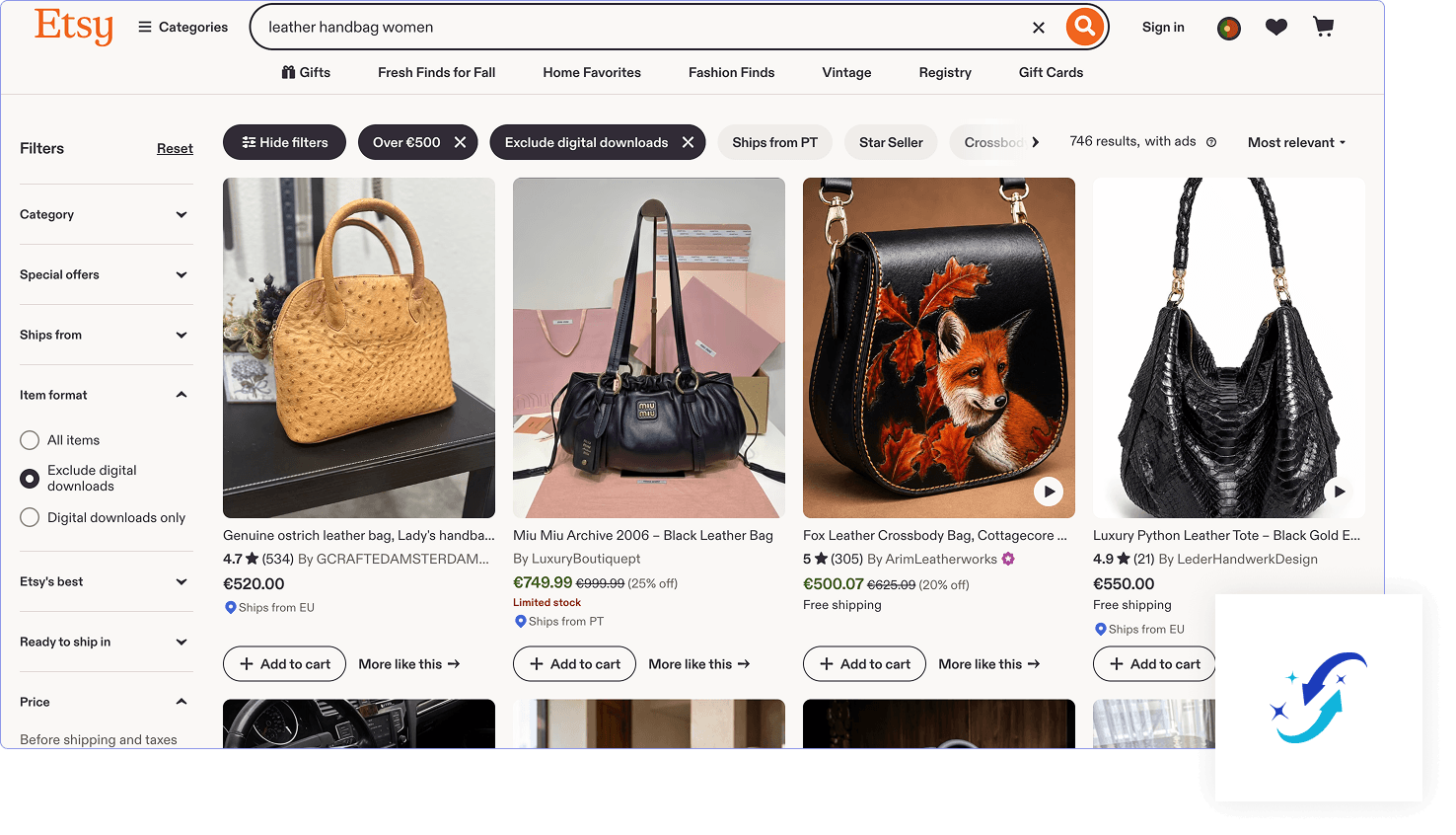
While typically known as a marketplace for handmade goods and vintage items, Etsy is a good choice for selling certain types of designer clothes — specifically, vintage designer. Etsy defines vintage as at least 20 years old, which means that while it may not be an ideal choice for contemporary designer clothing, it's a good option for selling vintage designer pieces. Vintage luxury shoppers on Etsy tend to value an item's history and rarity, and are willing to pay for the right vintage designer piece.
A major drawback is the lack of item authentication, which leaves you open to false claims of inauthenticity. As such, it's not suitable for very high-end items that are often duped online.
Marketplaces vs Consignment Sites for Selling Designer Clothes
Peer-to-peer ecommerce marketplaces and consignment sites are two different ways to sell designer clothes online, and each suits a different type of seller.
Consignment sites like The RealReal handle everything — authentication, photography, pricing, listing, shipping, and buyer communication. In exchange, they take a significantly larger cut of the final sale price in comparison to marketplaces, typically between 30% and 60%. Sellers receive payment once the item sells, but effectively have no control over when that is. For some items, this can take weeks or even months, while others might never sell at all.
Marketplaces, on the other hand, put every listing decision back in the seller's hands. That means photographing each piece, writing descriptions, setting prices, answering buyer questions, and shipping items yourself. While it certainly requires more work, selling on a marketplace means that you have more control over the sale price, and receive more of the profit when the item sells.
Deciding between them usually comes down to time and seller preference. People with a few one-off luxury pieces from their closet and no interest in managing listings often prefer consignment. Sellers who look at selling designer clothes and luxury goods as a business opportunity, on the other hand, should instead opt for marketplaces (or even their own webstore). You'll not only keep a bigger cut of every sale, but also have more control over how your business operates.
Selling Designer Clothes Across Multiple Marketplaces with ExportYourStore
Choosing the right platform for a designer piece is important, but the best way to sell new and used designer clothes is to be on more than one platform at a time. Each marketplace and consignment platform we covered above has its own buyer audience, so an item that struggles to sell on one channel can often find its buyer on another. In our experience helping sellers list designer inventory across multiple platforms, those who crosslist to multiple channels tend to get more sales than those who choose to remain on a single marketplace.
ExportYourStore's AI crosslisting tools enable sellers to grow their designer fashion business to more selling channels easily. Just create a listing on your primary selling channel, and use ExportYourStore to crosslist it to your choice of additional channels. ExportYourStore's integrations include Vestiaire Collective, Poshmark, Depop, Grailed, Vinted, eBay, and more, allowing you to grow your luxury and designer reselling business easily and at your pace.
But ExportYourStore does more than just crosslist items; it keeps your inventory synced automatically across every connected channel. When an item sells on Poshmark, it's automatically delisted from any other channel it's currently listed on, so you don't have to worry about overselling. And to make sure that every item gets the best possible start on every new platform, ExportYourStore allows you to easily optimize everything from titles to prices automatically and in bulk with both AI tools and custom crosslisting rules. Bump up prices by 5% when crosslisting from Vinted to Poshmark to make up for the higher selling fees, use AI to automatically fill out detailed item specifics when crosslisting from Depop to eBay, and even set channel-specific rules to determine what crosslists to where.
Selling Designer Clothes on Your Own Webstore
Sellers who've built steady sales across marketplaces often reach a point where launching their own webstore is the natural next step. A webstore is your own online store, independent of marketplaces or consignment stores, that's hosted on a shopping cart platform such as Shopify, WooCommerce, or BigCommerce. Selling through a webstore removes the marketplace commission from every sale while giving sellers full control over how their designer items are presented and priced.
Shopify is the fastest and simplest of the three to set up, and comes with product pages, checkout, and shipping features built in. WooCommerce runs as a plugin on WordPress and offers more flexibility for sellers who want to handle their own hosting and customization. BigCommerce sits between the two, offering a selection of features and a scalable structure designed to grow with your business.
ExportYourStore integrates with all three, making it easy to grow your business to an independent webstore as soon as you're ready. It syncs inventory automatically between the webstore and connected marketplaces, and simply acts as another selling channel. That way, you get the best of both worlds — the structured selling ecosystem of marketplaces, alongside the independence of a standalone webstore.


%20(1).svg)


%20(1).png)
%20(1).png)


.svg)